CHEMICAL SUPPLIER : solvent for epoxy resin coatings
Showing posts with label solvent for epoxy resin coatings. Show all posts

Tuesday, July 4, 2017

BENZAL SOLVENT PLASTICIZER for EPOXY COATING

In the case of epoxy coatings, the VOC requirement for floor coatings calls for less than or equal to 100 g/L in order to obtain the credits for LEED ( Leadership in Energy & Environmental Design, another factor of increasing importance concerning VOC regulations is the Green Building   ) classification. The challenge comes from the fact that most, if not all, of the so-called solvent-free epoxy coatings quite often have a nonreactive plasticizer in their composition. These plasticizers give the final coating the flexibility necessary to meet industry requirements. The most common nonreactive plasticizer used is BENZAL. This normally results in a standard VOC content in excess of 250 g/L, if the BENZAL is classed as a volatile compound. Additionally, as BENZAL is classed as a fugitive plasticizer (one that volatizes during the drying process) the coating can lose its flexibility over the service life as the BENZAL leaches out of the coating.

BENZAL  is added to coating formulations in order to ensure good processing viscosity at low temperatures (about 15° C.). BENZAL as a solvent are its low volatility and low toxicity. The product is used as a coalescing agent or as a co-solvent. It has a good performance in dissolving hydrophobic amines in water- based systems and also acts as a viscosity-reducing agent in some coating systems.

BENZAL is a versatile co-solvent used in a wide range of curing agent formulations for epoxy resins used in coatings, flooring systems, adhesives, etc. The product can also be used as a co-catalyst and plasticizer and to keep the temperature low during the curing process.

In paint strippers BENZAL is used as an environmentally friendly substitute for methylene chloride. Major applications are in industrial paint stripping (in particular in formulations used for aircraft) and in architectural, professional and do-it-yourself paint stripping.

In the pharmaceutical industry BENZAL is used as a preservative, in emulsions and ointments and in insect-bite lotions.

BENZAL  is used as a raw material in the manufacture of its various esters, which are used in the soap, perfume and flavor industries and as an intermediate in the synthesis of polypeptides. Examples of these esters are benzyl acetate and benzyl benzoate. Benzyl acetate is used in flavors for its pear-like taste, as a jasmine perfume ingredient and as a fixative for artificial musks. Benzyl benzoate finds application in pharmaceuticals, as a fixative in perfumes, as a flavoring in confectioneries and chewing gums, and as a softener in lacquers.


Based on the high purity and stable odor profile our BENZAL is also used for fragrance applications. Other applications of BENZAL include coatings, lacquers, photo developer systems, metal cleaning formulations, cosmetics and hair care applications.
Next opened http://www.sanminglobe.com/2017/07/benzal-for-cosmetic-parfume-and-soap.html

For any further info please feel free to contact us
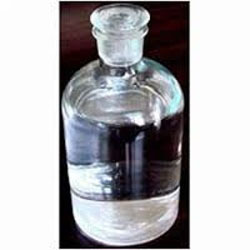
BENZAL SOLVENT PLASTICIZER for EPOXY COATING


Wednesday, March 22, 2017

BENZYL ALCOHOL IN EPOXY FORMULATION

In the case of epoxy coatings, the VOC requirement for floor coatings calls for less than or equal to 100 g/L in order to obtain the credits for LEED ( Leadership in Energy & Environmental Design, another factor of increasing importance concerning VOC regulations is the Green Building   ) classification. The challenge comes from the fact that most, if not all, of the so-called solvent-free epoxy coatings quite often have a nonreactive plasticizer in their composition. These plasticizers give the final coating the flexibility necessary to meet industry requirements. The most common nonreactive plasticizer used is BENZYL ALCOHOL (BzOH). This normally results in a standard VOC content in excess of 250 g/L, if the BzOH is classed as a volatile compound. Additionally, as BzOH is classed as a fugitive plasticizer (one that volatizes during the drying process) the coating can lose its flexibility over the service life as the BzOH leaches out of the coating.

Benzyl alcohol is added to coating formulations in order to ensure good processing viscosity at low temperatures (about 15° C.). benzyl alcohol as a solvent are its low volatility and low toxicity. The product is used as a coalescing agent or as a co-solvent. It has a good performance in dissolving hydrophobic amines in water- based systems and also acts as a viscosity-reducing agent in some coating systems.

Benzyl alcohol is a versatile co-solvent used in a wide range of curing agent formulations for epoxy resins used in coatings, flooring systems, adhesives, etc. The product can also be used as a co-catalyst and plasticizer and to keep the temperature low during the curing process.

In paint strippers benzyl alcohol is used as an environmentally friendly substitute for methylene chloride. Major applications are in industrial paint stripping (in particular in formulations used for aircraft) and in architectural, professional and do-it-yourself paint stripping.

In the pharmaceutical industry benzyl alcohol is used as a preservative, in emulsions and ointments and in insect-bite lotions.

Benzyl alcohol  is used as a raw material in the manufacture of its various esters, which are used in the soap, perfume and flavor industries and as an intermediate in the synthesis of polypeptides. Examples of these esters are benzyl acetate and benzyl benzoate. Benzyl acetate is used in flavors for its pear-like taste, as a jasmine perfume ingredient and as a fixative for artificial musks. Benzyl benzoate finds application in pharmaceuticals, as a fixative in perfumes, as a flavoring in confectioneries and chewing gums, and as a softener in lacquers.

 Based on the high purity and stable odor profile our benzyl alcohol is also used for fragrance applications. Other applications of benzyl alcohol include coatings, lacquers, photo developer systems, metal cleaning formulations, cosmetics and hair care applications.

Next opened http://www.sanminglobe.com/2016/09/benzyl-alcohol.html

For any further info please feel free to contact me, 02130338599, WA 087737835317, michael@sanminglobe.com

Rgds,

Michael


Thursday, September 15, 2016

BENZYL ALCOHOL

Benzyl alcohol is an aromatic alcohol with the formula C6H5CH2OH. The benzyl group is often abbreviated "Bn" (not to be confused with "Bz" which is used for benzoyl), thus benzyl alcohol is denoted as BnOH. Benzyl alcohol is a colorless liquid with a mild pleasant aromatic odor. It is a useful solvent due to its polarity, low toxicity, and low vapor pressure. Benzyl alcohol is partially soluble in water (4 g/100 mL) and completelymiscible in alcohols and diethyl ether. The anion produced by deprotonation of the alcohol group is known as benzylate or benzyloxide.


Benzyl alcohol is produced naturally by many plants and is commonly found in fruits and teas. It is also found in a variety of essential oils including jasmine,hyacinth, and ylang-ylang.
It is also one of the chemical compounds found incastoreum from the castor sacs of beavers.

Benzyl alcohol is used as a general solvent for inks, waxes, shellacs, paints, lacquers, and epoxy resin coatings. Thus it can be used in paint strippers, especially when combined with compatible viscosity enhancers to encourage the mixture to cling to painted surfaces. It is a precursor to a variety ofesters, used in the soap, perfume, and flavor industries. It is also used in e-liquid for e-cigarettes to enhance the flavors used. When applied to damaged skin or mucous membranes at a 10% concentration it acts as a local anesthetic and antimicrobial agent, and is sometimes included as a degreaser in rug cleaning products. As a dye solvent, it enhances the process of dying wool, nylon, and leather. It also has use as a photographic developer, and as an insect repellent.

source : https://en.wikipedia.org/wiki/Benzyl_alcohol

Next http://www.sanminglobe.com/2017/03/benzyl-alcohol-in-epoxy-formulation.html

For any requirement please feel free to contact us.