CHEMICAL SUPPLIER

Tuesday, July 4, 2017

BENZAL SOLVENT PLASTICIZER for EPOXY COATING

In the case of epoxy coatings, the VOC requirement for floor coatings calls for less than or equal to 100 g/L in order to obtain the credits for LEED ( Leadership in Energy & Environmental Design, another factor of increasing importance concerning VOC regulations is the Green Building   ) classification. The challenge comes from the fact that most, if not all, of the so-called solvent-free epoxy coatings quite often have a nonreactive plasticizer in their composition. These plasticizers give the final coating the flexibility necessary to meet industry requirements. The most common nonreactive plasticizer used is BENZAL. This normally results in a standard VOC content in excess of 250 g/L, if the BENZAL is classed as a volatile compound. Additionally, as BENZAL is classed as a fugitive plasticizer (one that volatizes during the drying process) the coating can lose its flexibility over the service life as the BENZAL leaches out of the coating.

BENZAL  is added to coating formulations in order to ensure good processing viscosity at low temperatures (about 15° C.). BENZAL as a solvent are its low volatility and low toxicity. The product is used as a coalescing agent or as a co-solvent. It has a good performance in dissolving hydrophobic amines in water- based systems and also acts as a viscosity-reducing agent in some coating systems.

BENZAL is a versatile co-solvent used in a wide range of curing agent formulations for epoxy resins used in coatings, flooring systems, adhesives, etc. The product can also be used as a co-catalyst and plasticizer and to keep the temperature low during the curing process.

In paint strippers BENZAL is used as an environmentally friendly substitute for methylene chloride. Major applications are in industrial paint stripping (in particular in formulations used for aircraft) and in architectural, professional and do-it-yourself paint stripping.

In the pharmaceutical industry BENZAL is used as a preservative, in emulsions and ointments and in insect-bite lotions.

BENZAL  is used as a raw material in the manufacture of its various esters, which are used in the soap, perfume and flavor industries and as an intermediate in the synthesis of polypeptides. Examples of these esters are benzyl acetate and benzyl benzoate. Benzyl acetate is used in flavors for its pear-like taste, as a jasmine perfume ingredient and as a fixative for artificial musks. Benzyl benzoate finds application in pharmaceuticals, as a fixative in perfumes, as a flavoring in confectioneries and chewing gums, and as a softener in lacquers.


Based on the high purity and stable odor profile our BENZAL is also used for fragrance applications. Other applications of BENZAL include coatings, lacquers, photo developer systems, metal cleaning formulations, cosmetics and hair care applications.
Next opened http://www.sanminglobe.com/2017/07/benzal-for-cosmetic-parfume-and-soap.html

For any further info please feel free to contact us
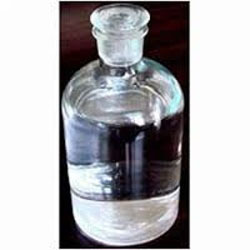
BENZAL SOLVENT PLASTICIZER for EPOXY COATING


Sunday, June 11, 2017

GLYCOL DATA COMPARATION


Berikut adalah data Ethylene Glycol dengan Diethylene Glycol dan Triethylene Glycol serta jenis glyol lainnya, semoga bermanfaat


GLYCOL DATA COMPARATION

More info about TEG .

For any further info please email michael@sanminglobe.com, WA 085894436642, 02130338599

Sunday, June 4, 2017

JEFFAMINE D 230 as specialthy epoxy curing agent

Jeffamine D-230 polyoxypropylenediamine undergoes reactions typical of primary amines. Jeffamine D-230 polyetheramine is a difunctional, primary amine with an average molecular weight of about 230. The primary amine groups are located on secondary carbon atoms at the end of the aliphatic polyether chain.

Because of its unique structure, however, Jeffamine D-230 has found its most significant use as an epoxy curing agent. The use of Jeffamine D-230 leads to tough, clear, impact-resistant coatings, castings, and adhesives.
Example include coatings for decoupage and furniture, reinforced composites, electrical encapsulation, and lamination. Coatings made with unmodified Jeffamine D-230 are free of the surface “ blush “ prevalent with many amine curing agents. Jeffamine D-230 has found its way into miniature medical devices, industrial floors, boat construction, decorator clocks, and space vehicles.

Epoxies formulated with Jeffamine D-230 can be readily modified because Jeffamine D-230 is compatible with a wide range of modifiers and curing agents, including other Jeffamine products. Amidation of Jeffamine D-230 with a variety of aliphatic and aromatic carboxylic acids is readily accomplished by known techniques. The resulting poly-amides are of interest as “ hot melt “ adhesives, for example.

As a primary amine, Jeffamine D-230 reacts quickly with isocyanates. The reaction can be managed however, if small quantities are used ( e.g. as a viscosity modifier ) or if quick-mix equipment ( e.g, RIM ) is employed.

Salts may be formed readily which have potential use, e.g, as surfactants and fire retardants. The reactivity of Jeffamine D-230 may be modified by cyanoethylation, a reaction which proceeds readily and cleanly. Polyurea coatings have been made from the cyanoethylated derivative.

APPLICATIONS :
• Epoxy Curing Agent
• Reacts with carboxylic acids to form hot melt adhesives
• Reacts quickly with isocyanates
• Salts may be formed readily for surfactant use

BENEFITS
• Low viscosity, color and vapor pressure
• Completely miscible with a wide variety of solvents, including water
• Provides tough, clear, impact resistant coatings, castings, and adhesives
• Coatings are free of surface blush prevalent with many amine curing agents

Another Epoxy Hardener using DETA/ Diethylenetriamine please click
Jeffamine D 230 as specialthy epoxy curing agent


Next Topics : 


For any further info please feel free to contact me.

JEFFAMINE D 230 as specialthy epoxy curing agent
JEFFAMINE D 230 as specialthy epoxy curing agent 


Monday, May 29, 2017

ARQUATAD 2 HT-75 Indonesia

Arquat 2HT-75 adalah bahan bahan aktif pelembut pakaian yang memiliki sifat kationik.

Cationic softeners adalah bahan pelembut pakaian yang bersifat kationik, memperlihatkan tingkat kelembutan yang terbaik sehingga banyak digunakan pada industri tekstil, laundry dan rumah tangga. 

Bahan Pelembut Cationic Softener memilki kemampuan daya tarik-menarik terhadap hampir semua jenis bahan fiber dan  biasanya diaplikasi pada metode exhaust. 

Satu-satunya masalah adalah tidak kompatible dengan sifat anionik ( seperti bahan pemutih pakaian, bahan pencelupan ) dan juga efek kuning yang mudah terjadi bila dibandingkan dengan sifat non-ionic softener. Cationic Softener umumnya digunakan pada bahan-bahan kain/ tektil yang berwarna. 

Specification :


Product Characteristics

Arquad 2HT-75 is 75% dihydrogenatedtallow dimethylammonium chloride in water/isopropyl alcohol. This product is an excellent fabric softener.

Example Formulation

For 7% Quaternary Actives:

Arquad 2HT-75                                         9.33 %
Fragrance                                                 0.75 %
Optical brightener                                     as desired
Dye                                                           as desired
Deionized water                                        balance
10% CaCl2 solution to adjust viscosity


Mixing Directions:

Heat the deionized water to 60º C and melt the Arquad 2HT-75. Slowly add the Arquad 2HT to the water with high shear stirring. At the completion of the addition, add a small amount of salt solution (suggested 0.3 %) to lower viscosity. Cool the system to 40º C. Add the desired amounts of the optical brightener and then the fragrance. Agitate for about ten minutes to insure proper dispersion of the brightener and fragrance. If necessary, add slightly more salt solution to lower the viscosity. Add the dye and then cool to room temperature.

Thursday, May 18, 2017

Morpholine sebagai corrosion protection untuk aplikasi perawatan boiler

Morpholine is a common additive, in parts per million concentrations, for pH adjustment in both fossil fuel and nuclear power plant steam systems. Morpholine is used because its volatility is about the same as water, so once it is added to the water, its concentration becomes distributed rather evenly in both the water and steam phases. Its pH-adjusting qualities then become distributed throughout the steam plant to provide corrosion protection. Morpholine is often used in conjunction with low concentrations of hydrazine orammonia to provide a comprehensive all-volatile treatment chemistry for corrosion protection for the steam systems of such plants. Morpholine decomposes reasonably slowly in the absence of oxygen at the high temperatures and pressures in these steam systems.

Source :
https://en.wikipedia.org/wiki/Morpholine

Pengendapan material pada air umpan boiler dapat mengakibatkan menurunnya efektifitas perpindahan panas sehingga menyebabkan penggunaan bahan bakar menjadi boros, metal bersuhu tinggi bahkan bisa mengakibatkan kerusakan. Pengendapan juga merupakan masalah yang paling serius pada Boiler, bisa juga menyebabkan masalah-masalah pada sistem sebelum dan sesudah Boiler.

Korosi (pengkaratan) tidak hanya menyebabkan gangguan pada daerah yang kena karat, tapi juga bisa menghasilkan kontaminan oxyda logam yang pada tingkat yang serius bisa timbul ditempat lainnya. Karena semuanya berkaitan dengan pengolahan air, bila terjadi pembentukan pengendapan (deposit) dan korosi maka harus dikoreksi dan dicegah agar dapat tercapai hasil yang memuaskan. Penyebab terjadinya korosi adalah karena adanya oksigen (O2) yang terlarut dalam air.

Untuk menghilangkan senyawa O2 (oxygen) dalam air agar tidak terjadi korosi dapat dilakukan dengan beberapa cara diantaranya adalah sebagai berikut:


  • Deaerator, Fungsi dari alat ini ialah untuk menghilangkan gas-gas yang terlarut dan memanaskan air dengan cara mengkontakan langsung antara steam tekanan rendah dengan air. bila temperature air naik maka kelarutan oxygen akan berkurang karena keluar lewat venting.
  • Penambahan Hydrazine Hydrate (N2H4), Pada temperature diatas 2700C maka hydrazine akan berubah menjadi Ammonia ( NH3 ) dan Nitrogen. Bila reaksi lambat maka  jumlah Hydrazinnya bisa di tambah. Untuk meyakinkan bahwa O2 yang terlarut itu habis maka ditentukannya bahwa Hydrazine itu harus berlebih (Hydrazine rasidual). Pada umumnya untuk Boiler yang tekanan operasinya kurang dari 40 kg / cm2G maka residual N2H4 nya berkisar antara 0.1 ~ 0.3 ppm (part per million = per satu juta), untuk yang bertekanan lebih dari 40 kg / cm2 G berkisar pada 0.05 ~ 0.1 ppm.
  •  Volatile Treatment atau Zero Solid Treatment.adalah pemakaian chemical yang mudah menguap (volatile chemical) , seperti ammonia / morpholine atau cyclohexyl amine. Untuk mengontrol pH..Bahan ini di injeksikan kedalam Boiler water yang berfungsi untuk menjaga pH pada Boiler water, agar cukup tinggi untuk pencegahan korosi.
  • Injeksi (PO4 ) dan Alkali ( NaOH ) dilakukan secara langsung ke ketel maksudnya adalah untuk menghindari mengendapnya garam – garam Calsium Posphate, Magnesium Silicate, Calsium Carbonate, dsb, secara dini pada sistem. Endapan tersebut diatas dapat menimbulkan korosi didaerah pipa-pipa feedwater yang mana tidak ada methoda untuk mengeluarkannya, sedangkan di ketel  kita bisa membuang endapan- endapan tersebut dengan melakukan Blowdown. Alkali (NaOH) diinjectkan pada angka minimum yang dibutuhkan untuk menaikan pH secukupnya untuk mengendalikan korosi, bahan tersebut dimasukan bersama POSPHATE kedalam ketel.
Jual Morpholine , kemasan 200 kg/dr. stok tersedia, Harga bersaing selengkapnya jangan sungkan hubungi kami.

Mike
02130338599, WA 085894436642
michael@sanminglobe.com


Saturday, April 29, 2017

EPOXY FLOORING VS PU FLOORING

Epoxy floors are harder, more durable and have a much higher compression strength than polyurethanes. This is why they are the preferred choice for heavy duty industries, warehouses and logistics centers with heavy forklift traffic. 

Polyurethane floors are usually softer and more elastic, which makes them more resistant to scratching as their elasticity tends to absorb some of the impact. The elasticity of PU floors also makes them a preferred choice in freezing chambers where the storage temperature can reach -30 degrees Celsius (-22 F). They are also a good choice for multideck car-parks since the elastic coating can act as a waterproofing and crack-bridging layer.

Epoxies and polyurethanes behave differently when exposed to certain chemicals. For example polyurethanes are the preferred choice in food industries that have exposure to lactic acids. This the reason why many food processing companies that work in milk, dairy, cheese production choose polyurethanes. 

Epoxies under such conditions may experience corrosion and yellowing. However when working in industries with sulfuric acids (like battery manufacturing etc) epoxy floors are much more resistant than polyurethanes. If you are working in a facility with heavy exposure to chemicals, check with the manufacturer to see which product is better suited.

Click here to view a table on the chemical resistance properties of epoxy  
http://www.engineeringtoolbox.com/chemical-resistance-epoxy-d_786.html

Epoxy resins are also sensitive to moisture, but the damage done by humidity will be far more limited. Therefore when working in environments where the presence of humidity could be an issue, epoxy is always the much better choice.

Polyurethane floors can be easily modified to extend or limit their pot life, re-coat time as well as the total curing time. This flexibility enables contractors to complete PU floors in a much shorter space of time .With PU you could effectively start a multicoat project on Friday and hand it over on Monday. Epoxy floors are much less flexible in this respect in the sense that they usually require 7 days to fully cure.

In general polyurethanes are harder to work with. Their limited pot life and sensitivity to humidity require very well trained and experienced staff. Personally I refuse to supply inexperienced teams with PU floor resins. Too many things can go wrong.

Finally if you are wondering which one of the two resins is cheaper, I do not really have an answer to that. There are quite a few varieties of products out there. Comparing epoxies to PUs is like comparing apples to oranges. Ultimately your choice of floor should not be based on which one of the two is cheaper, but which one of the two suits your needs.